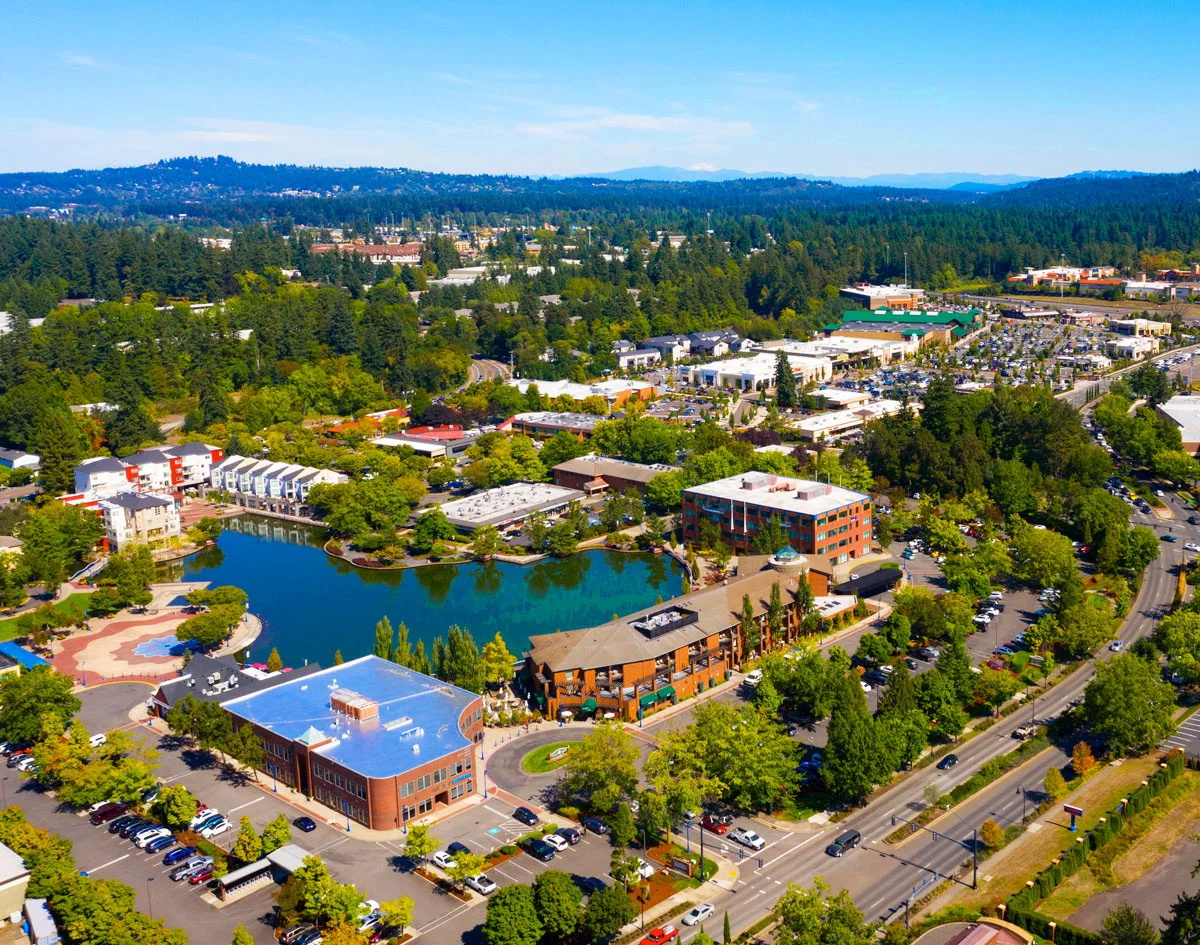
Hillsboro anchors Washington County's Silicon Forest, with Intel's Ronler Acres and Jones Farm campuses driving much of the office, flex, and industrial demand along Highway 26, and that employment concentration shapes replacement property underwriting more than in most other Portland-metro submarkets.
Silicon Forest Employment Base
Commercial property near the Intel campuses and the AmberGlen mixed-use area tends to command premium pricing relative to the rest of Washington County, while Hillsboro's historic downtown core and the MAX Blue Line terminus support a separate, smaller pool of retail and office condo product. A lender reviewing a replacement property here will look closely at how exposed the tenant base is to semiconductor-sector employment swings.
Sellers exchanging out of Hillsboro property often have larger proceeds to place than sellers in the smaller Washington County towns to the west.
The Tanasbourne area along Highway 26 adds a further band of retail and mixed-use commercial that serves a broader residential base than the Intel-adjacent office parks, giving Hillsboro sellers a genuine choice between employment-driven and rooftop-driven income when building a replacement list.
Office, Industrial, and Flex Stock Near Intel
The realistic Hillsboro identification list usually draws from property types tied directly to the tech employment base.
- Office buildings or flex space near the Ronler Acres and Jones Farm campuses
- Light industrial or manufacturing-support buildings along Highway 26
- Retail or mixed-use property in the AmberGlen or downtown core
- Multifamily communities near the MAX Blue Line terminus
- A DST allocation if larger sale proceeds outsize what direct purchases can absorb
Rule Mechanics for Tech-Adjacent Assets
Larger Hillsboro deal sizes make the 200% rule a more common tool than in smaller submarkets, letting sellers keep more than three candidates on the list as long as combined value stays under twice the relinquished sale price. When that ceiling is exceeded, the 95% rule requires closing on at least 95% of the identified value, which puts a premium on only listing properties the seller could realistically finance and close.
Lender Underwriting on Employment-Driven Property
Because so much of Hillsboro's commercial value is tied to one or two large employers, lenders often ask for more detail on tenant concentration and lease term than they would for a diversified retail center elsewhere in the metro. Getting that underwriting conversation started before the identification list is finalized helps avoid a financing surprise late in the 180-day window.
Boot exposure should be modeled against Hillsboro's premium pricing, since a seller moving out of a lower-value Washington County property into a Hillsboro asset may need a larger loan, not a smaller one, which can actually reduce debt-replacement risk rather than create it.
Hillsboro Inside a Washington County Search
Investors who find Hillsboro pricing too rich for their proceeds sometimes widen the search toward Beaverton for similar tech-adjacent office and flex product, or Forest Grove for a lower-cost, less tech-concentrated alternative within the same county.
Each direction trades a different set of risks: Beaverton keeps the tech-employment exposure but at a somewhat lower price point, while Forest Grove reduces that exposure but comes with a thinner, slower-moving pool of comparable buildings.
Common 1031 Exchange Questions
Does employment concentration around Intel create extra lender risk for Hillsboro replacement property?
It can. Lenders often scrutinize tenant concentration more closely on Hillsboro office and flex buildings tied to one or two large employers, so getting ahead of that underwriting conversation before the identification list is locked is worthwhile.
Can flex or industrial property near the Intel campuses replace a Hillsboro office building?
Yes, both are real property held for investment and are treated as like-kind to one another. The more important question is usually whether the replacement property's income profile matches what the seller needs from the exchange.
What if a Hillsboro exchange needs more than three identified properties?
The 200% rule allows an unlimited number of identified properties as long as their combined value does not exceed twice the relinquished property's sale price; beyond that, the 95% rule requires closing on at least 95% of the identified value.
How is boot treated if a Hillsboro seller takes cash out at closing?
Any cash received above what is reinvested into the replacement property is taxable boot, separate from any debt-replacement shortfall, so a seller who wants full deferral generally needs to reinvest both the full proceeds and match or exceed the relinquished debt.
What role does the qualified intermediary play once escrow opens on a Hillsboro deal?
The qualified intermediary receives the relinquished property's sale proceeds directly from escrow, holds them until the replacement purchase is ready to close, and then delivers funds to the new escrow, keeping the seller from ever taking direct control of the money.
Does the Tanasbourne retail corridor underwrite differently than Intel-adjacent office space?
Yes, lenders typically weigh Tanasbourne retail against broader residential demand and co-tenancy terms, while Intel-adjacent office and flex space is underwritten more around tenant concentration and lease term, so the two property types often move through separate diligence tracks.
Can a Hillsboro exchange combine a downtown retail candidate with a Ronler Acres office building?
Yes, both are real property held for investment and can sit on the same identification list, which lets a seller weigh two very different income profiles before deciding which one to actually close on, once financing terms on each are confirmed.