Lake Oswego is one of the more affluent, low-inventory submarkets in the Portland metro, and that combination changes exchange strategy more than it changes the underlying federal rules: fewer qualifying properties trade at any given time, so identification lists here need to be built earlier and wider than in denser submarkets.
An Affluent Close-In Submarket
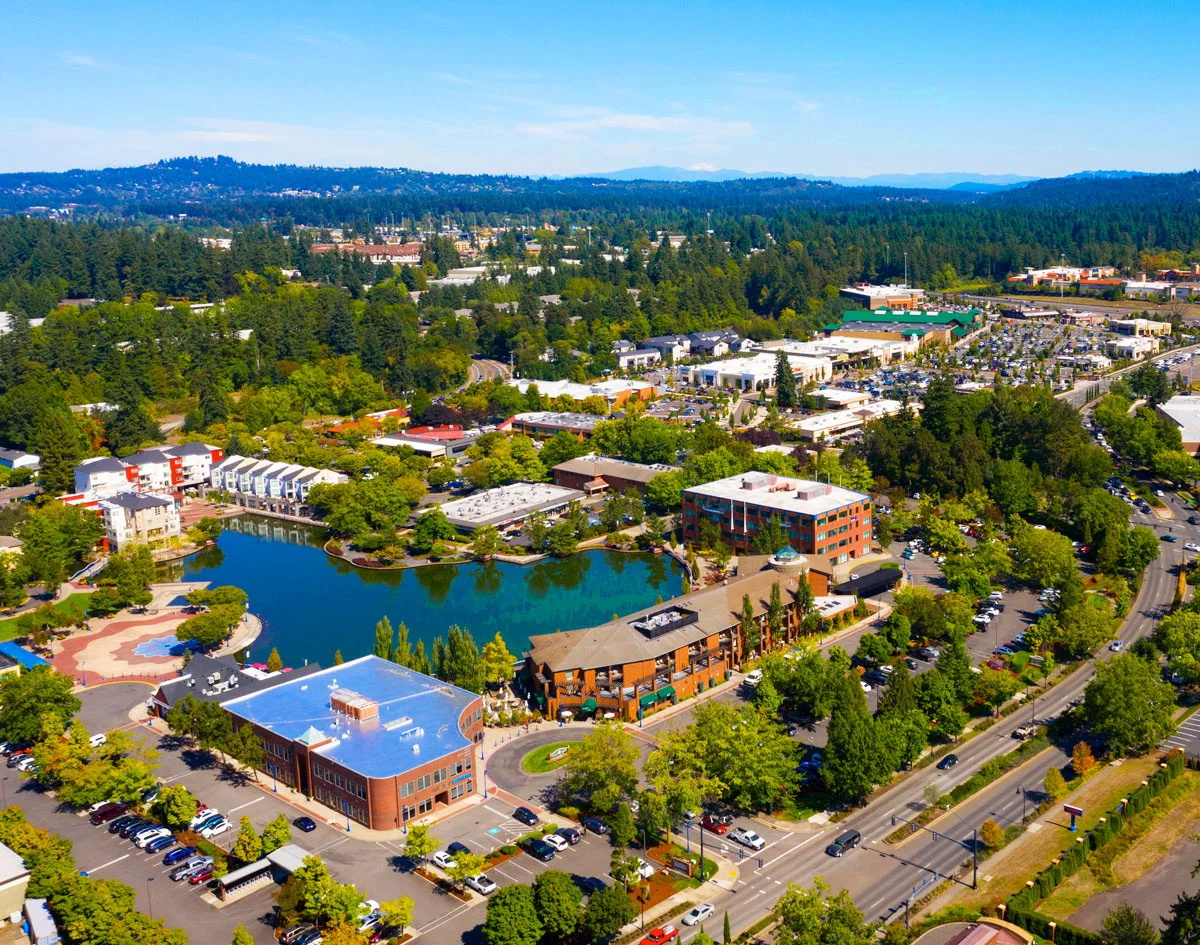
Commercial property clusters around downtown Lake Oswego and First Addition, along Highway 43, and in the Kruse Way office corridor near I-5, where premium office and boutique retail command higher per-square-foot pricing than most of the surrounding metro. The lake itself is privately held and not a commercial asset, so it plays no role in identification, but its presence supports high-value residential-adjacent retail nearby.
Sellers here are frequently dealing with a smaller number of very well-maintained buildings rather than a broad, varied inventory.
Lake Grove, a few miles southwest along Boones Ferry Road, adds a second, somewhat less expensive retail node that gives sellers a nearby alternative without leaving the Lake Oswego school district and address, which matters to some investors even though it has no bearing on exchange rules.
Limited, High-Value Commercial Stock
A realistic Lake Oswego identification list is narrow and often needs to reach beyond city limits, since the same handful of well-maintained buildings tend to stay in long-term ownership rather than trading frequently.
- Office buildings along the Kruse Way corridor near I-5
- Boutique retail or service buildings in downtown or First Addition
- Professional office condos serving the local business base
- Small multifamily property in the immediate area
- A DST allocation when qualifying local inventory does not exist by day 45
Identification Discipline in a Thin Market
Because so few properties trade in Lake Oswego at any time, sellers should start scouting realistic candidates well before the relinquished property even closes, since building a three-property list from scratch inside 45 days can be difficult in a market this thin. The 200% rule is less commonly needed here simply because there are rarely enough qualifying properties to exceed it.
Financing and Title on Premium Assets
Premium Kruse Way office buildings and downtown retail can take longer to appraise given limited comparable sales, so lender preflight should begin as early as possible. Title work on older downtown parcels sometimes surfaces easements or historic-district considerations that need extra lead time to clear before a closing date can be locked in.
Boot exposure is often driven by price rather than debt here: a Lake Oswego replacement property can require significantly more equity than the relinquished asset generated, which changes the conversation from avoiding boot to confirming the seller has enough proceeds to close at all.
Lake Oswego Against Nearby Alternatives
When Lake Oswego inventory will not close the gap, investors commonly look toward West Linn for comparable premium positioning at a somewhat lower basis, or toward Milwaukie for a lower-cost alternative that still sits inside a short drive of the original submarket.
Both alternatives keep the search inside a familiar radius for the seller's broker and lender, which matters when a thin-inventory identification list needs to be finalized quickly rather than expanded across an unfamiliar part of the metro.
Common 1031 Exchange Questions
Does a high-value, thin market like Lake Oswego change identification strategy?
Yes. Because so few qualifying properties trade at any given time, sellers should start identifying realistic candidates before the relinquished property even closes, rather than waiting until the 45-day window opens.
Can a DST placement help if no direct Lake Oswego property fits the identification list?
Yes, a DST interest is a common backup in thin premium markets, letting a seller satisfy the identification and closing requirements even when no single local building matches the proceeds and timeline available.
What if only one qualifying property exists in the entire Lake Oswego submarket?
A single identified property is valid under the three-property rule as long as it is described specifically in writing by day 45; the seller is not required to identify three candidates.
How does title work differ on premium Lake Oswego commercial assets?
Older downtown and First Addition parcels can carry easements or historic-district overlays that take longer to clear than a standard suburban commercial title, so title review should start as soon as a property is identified.
What documentation should be gathered before day 45 on a Lake Oswego exchange?
Given limited comparable sales, an early appraisal estimate, a lender term sheet, and title preliminary report on any candidate property help confirm the deal is financeable before it is locked into the identification list.
Is Lake Grove treated as part of the same search area as downtown Lake Oswego?
For exchange purposes, both are simply real property in the same general submarket, so a Lake Grove property can sit on the same identification list as a downtown or Kruse Way candidate without any distinction under the exchange rules.
Should a Lake Oswego seller expect a longer appraisal timeline than in a denser submarket?
Often yes, since fewer comparable sales exist in a market this thin, which is another reason to start the appraisal and lender conversation as early as possible rather than waiting until the identification list is finalized.
Does the Kruse Way office corridor trade differently than downtown Lake Oswego retail?
Yes, Kruse Way office buildings are underwritten more around tenant credit and lease term, while downtown and First Addition retail trades more on foot traffic and co-tenancy, so a seller comparing the two should expect different diligence checklists.