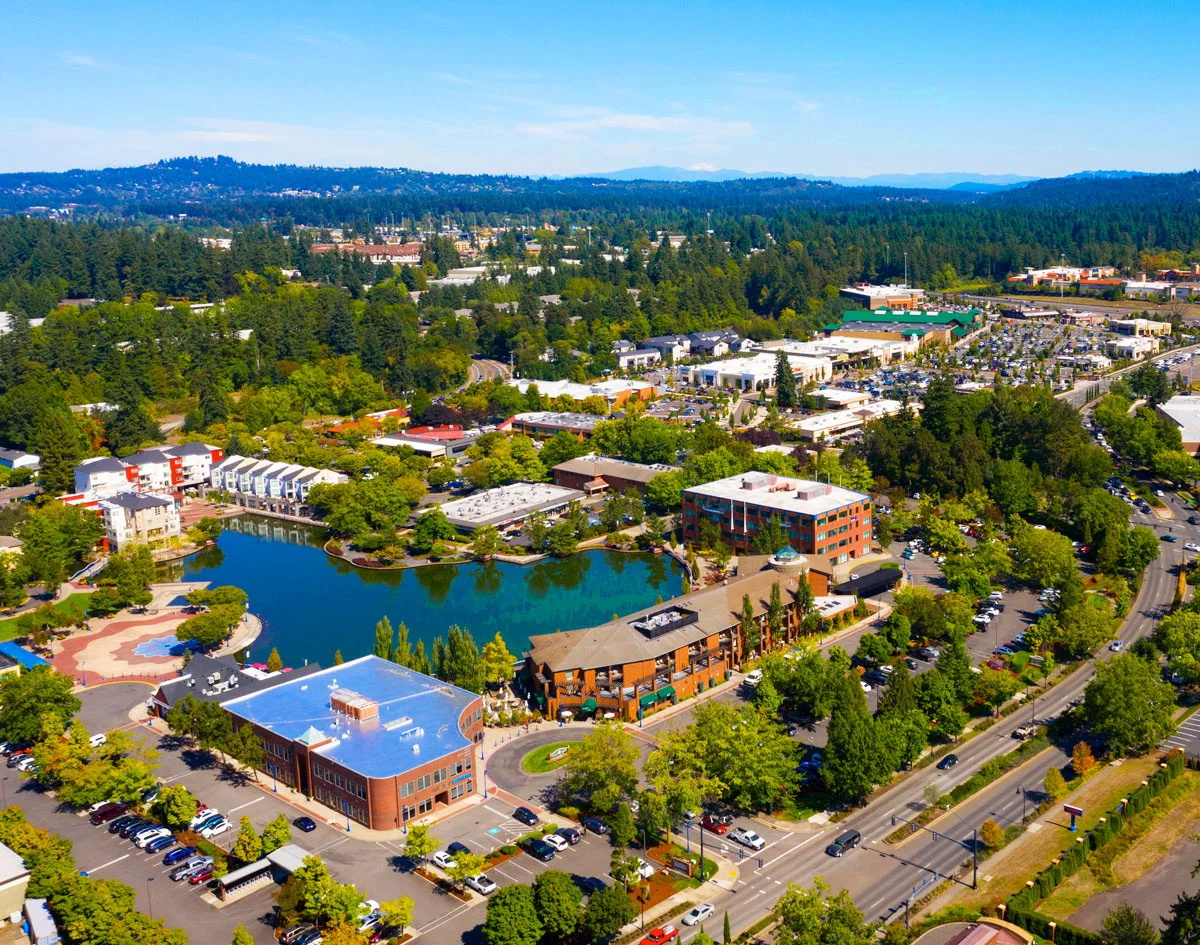
Gresham is the largest commercial base in east Multnomah County, with a mix of industrial parks, retail corridors, and MAX Blue Line transit access that gives sellers here more identification options than most of the smaller east county cities around it.
East Metro's Larger Commercial Base
The Springwater industrial area and the corridor along Powell Boulevard and Burnside carry a meaningful share of Gresham's commercial inventory, alongside retail centers near Mt. Hood Community College and the MAX Blue Line stations. Deal sizes here run larger than in Fairview, Wood Village, or Troutdale, closer to what Clackamas or Hillsboro sellers typically see.
That scale means Gresham exchanges more frequently need the 200% and 95% identification rules than the smaller east county towns nearby.
Downtown Gresham's historic core and the area around Powell Butte add a further layer of smaller-format retail and office space that trades separately from the larger Springwater industrial parcels, giving sellers here a genuine choice between scale and manageability when building a replacement list.
Industrial, Retail, and Transit-Adjacent Stock
A Gresham identification list typically spans a wider range of property types than smaller east county submarkets.
- Industrial and distribution buildings in the Springwater area
- Retail centers along Powell Boulevard and Burnside
- Office or mixed-use property near MAX Blue Line stations
- Larger multifamily communities inside the transit corridor
- A DST allocation sized to absorb proceeds beyond what direct purchases can close
45-Day Math on Bigger Deals
With larger equity positions common in Gresham exchanges, sellers who want more than three candidates on their identification list often lean on the 200% rule, keeping combined value under twice the relinquished sale price, with the 95%-close requirement as the fallback if that ceiling is exceeded. Mortgage boot deserves early attention too, since Springwater industrial buildings can carry meaningfully different loan-to-value profiles than transit-adjacent retail or multifamily.
Lender and Environmental Diligence
Older Springwater-area industrial buildings sometimes carry a history of prior manufacturing or storage uses, so environmental review should be scheduled as soon as a property lands on the identification list rather than assumed to be routine. Lender preflight should run in parallel, since larger industrial loans typically take longer to underwrite than retail or multifamily financing.
The qualified intermediary, lender, and title company should be working from a shared closing calendar well ahead of the 180-day deadline, particularly when environmental review timelines are uncertain.
Retail centers near Mt. Hood Community College and the MAX Blue Line stations carry a different diligence profile, with more emphasis on parking ratios, co-tenancy provisions, and transit-driven foot traffic than on soil or groundwater history, so the two property types on a Gresham identification list often move through diligence on separate tracks.
Gresham Against Other East County Candidates
Sellers with larger proceeds sometimes widen a Gresham search toward Troutdale for additional industrial stock or keep it local given the depth of Gresham's own inventory, weighing environmental and financing timelines against the benefit of staying inside a single, well-known submarket.
Staying local also means the qualified intermediary and lender are working with familiar comparable sales and financing patterns, which can shave time off a schedule that is already tight once a 200%-rule identification list is in play.
Common 1031 Exchange Questions
Does a larger Gresham equity position change how the identification math works?
The rules themselves do not change, but larger Gresham deals more often need the 200% rule to identify more than three candidates, with the 95%-close requirement applying if the combined identified value exceeds that ceiling.
How does a reverse exchange work if a Gresham replacement property closes before the relinquished sale?
In a reverse exchange, an exchange accommodation titleholder holds the replacement property until the relinquished sale closes, which lets the investor lock in a Gresham purchase without waiting on the original sale timeline, though it adds cost and complexity compared to a standard forward exchange.
What lender preflight steps matter most on larger Gresham industrial deals?
Getting loan terms and an underwriting timeline confirmed before day 45 matters most, since industrial loans on Springwater-area buildings can take longer to close than retail or multifamily financing, and a late-stage financing delay is harder to absorb inside 180 days.
Can boot appear if a Gresham seller pays down debt significantly at closing?
Yes, reducing debt without replacing it with new financing or additional cash on the replacement side creates mortgage boot, which is taxable regardless of whether any cash was actually received.
What environmental diligence applies to older Gresham industrial stock?
A Phase I environmental site assessment is standard on older Springwater-area buildings with a history of industrial use, and that review should be scheduled early since it can extend the closing timeline if further testing is required.
Does transit access near the MAX Blue Line change how a Gresham retail identification is underwritten?
Lenders sometimes view transit-adjacent retail more favorably for tenant access, but they will still weigh co-tenancy provisions and parking ratios the same way they would elsewhere, so transit proximity helps but does not replace standard rent roll and lease review.
Can a Gresham seller identify both an industrial property and a retail property on the same list?
Yes, the identification list can mix property types freely as long as the three-property, 200%, or 95% rule is satisfied, which is common in Gresham given the range of asset classes available.