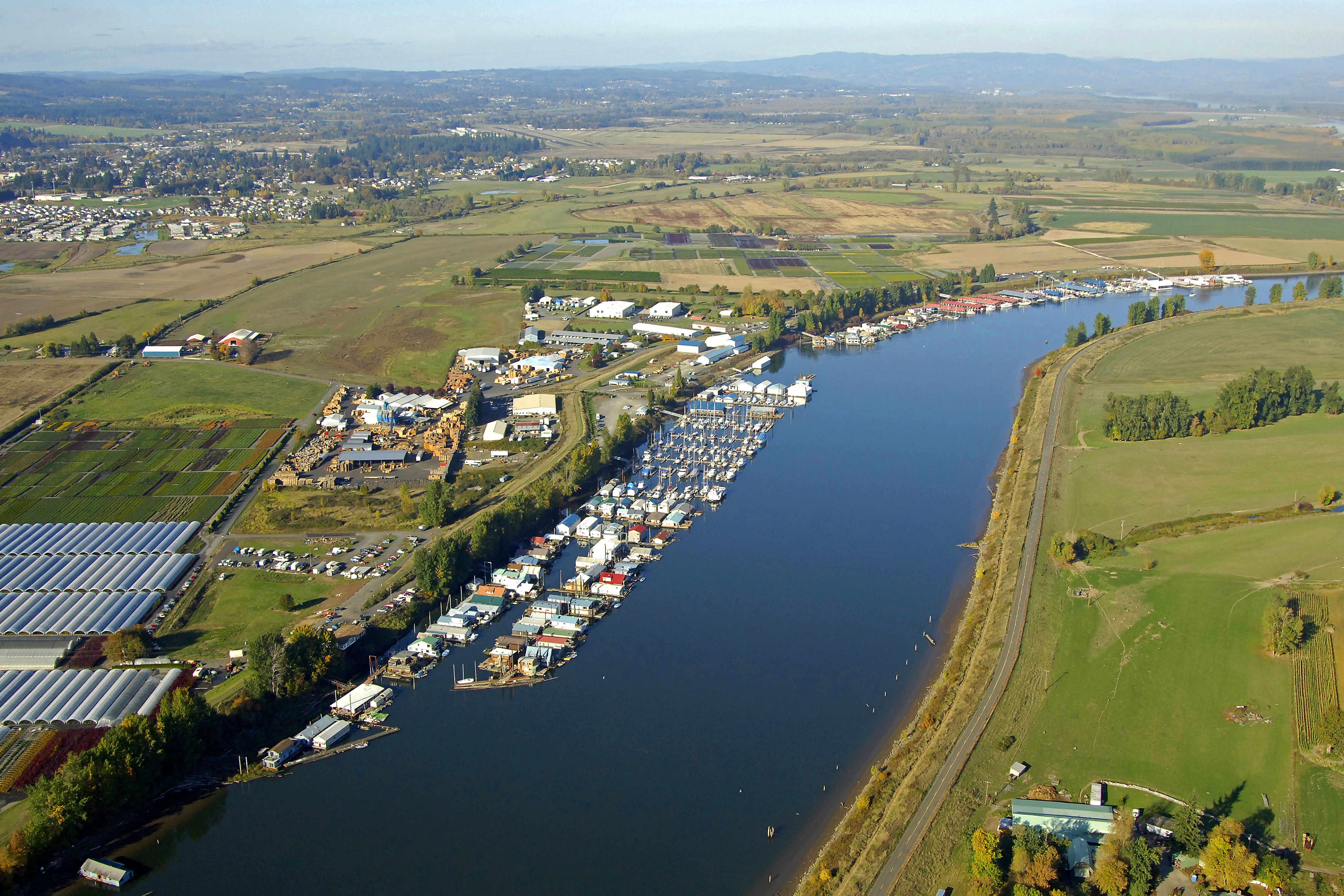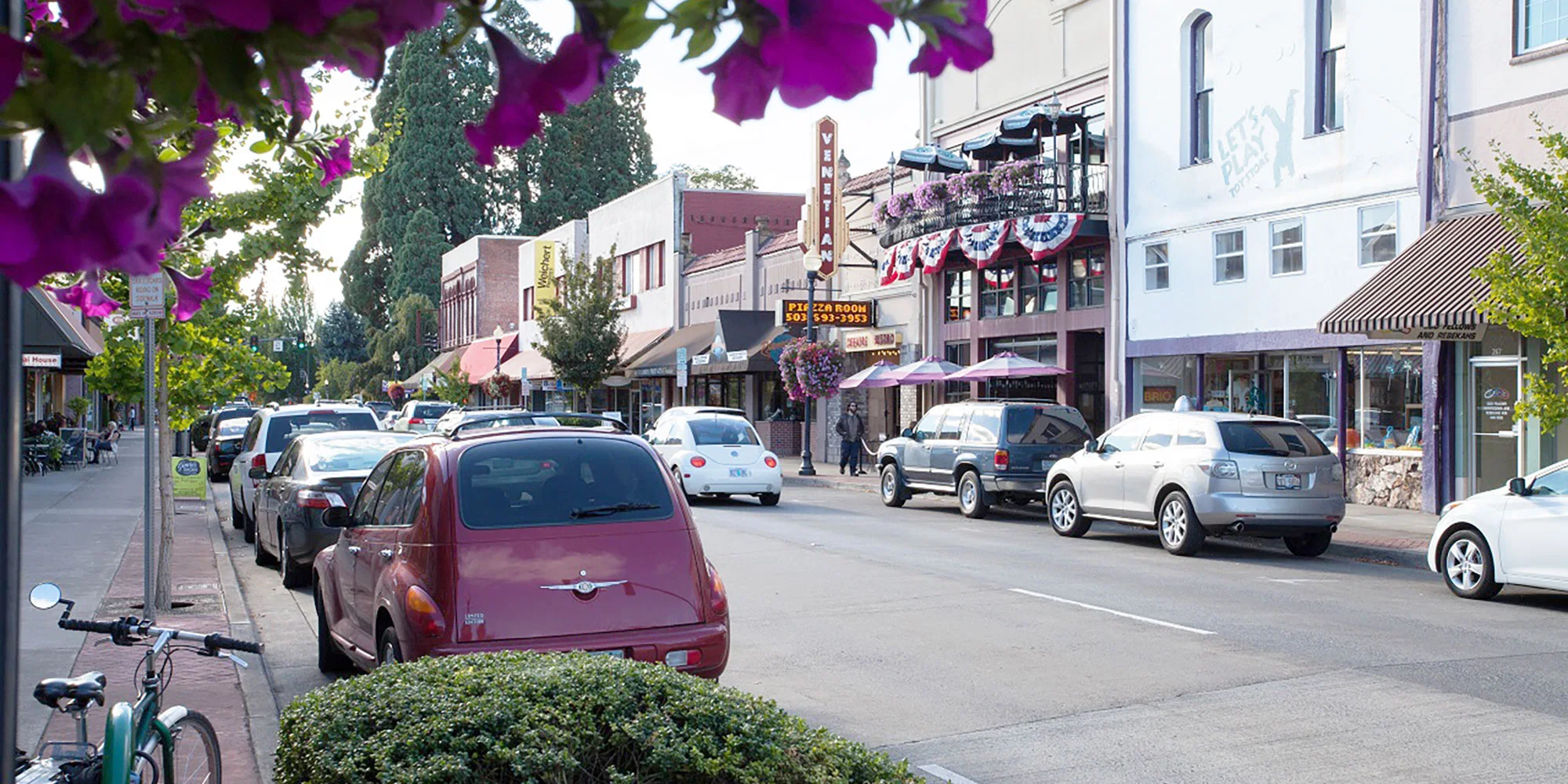
Wood Village is one of the smallest incorporated cities in the Portland metro, tucked between Fairview, Troutdale, and Gresham in east Multnomah County. Its commercial footprint is small enough that an honest replacement property plan treats it as one piece of a broader east-county search rather than a standalone market.
What Commercial Stock Exists in a City This Size
Wood Village's commercial base sits along NE Halsey Street, holding a small retail center and a handful of standalone retail and service buildings. There is limited light-industrial space and no significant office inventory, which reflects the city's small residential population and its position hemmed in by larger neighbors on every side.
Why the Search Extends Into Gresham, Troutdale, and Fairview
Because Wood Village's stock is so limited, most exchanges touching this city end up comparing a small local asset against larger retail and industrial inventory in Gresham, industrial and outlet-retail space in Troutdale, or Fairview's commercial nodes along the same Halsey corridor. That comparison isn't a sign of a weak strategy, it's simply what a small east-county city requires.
Matching Value From a Small Base
Full deferral requires replacement value equal to or greater than the relinquished property's sale price and replacement debt equal to or greater than the debt retired at closing. Given Wood Village's limited inventory, most investors will need to combine a small local retail asset with one or two properties from a neighboring city to reach a meaningful replacement value.
- Small retail center space along NE Halsey Street
- Standalone retail and service buildings
- Limited light-industrial parcels
- Backup retail candidates in Fairview or Gresham
- Backup industrial candidates in Troutdale
Using the Value Rules Across a Cluster of Small Cities
A written identification can name up to three properties without regard to value, or more than three if the combined value stays under 200 percent of the relinquished property's value. For a Wood Village-based exchange, that flexibility is what makes a realistic plan possible: a local asset can be paired with candidates from Fairview, Troutdale, or Gresham on the same identification rather than forcing a single-city search.
Coordination for a Small, Fast-Moving Market
Before Day 45, confirm lease terms and rent history on any Wood Village candidate, and don't assume a second small local asset will surface later if the first falls through, since the city's limited stock means fewer standby options than a larger submarket offers. Confirm the qualified intermediary's exchange agreement and escrow instructions are in place early, and get lender terms on any smaller retail or industrial building pre-flighted before it is added to the identification.
Setting Realistic Timelines Given the Standby Constraint
Because Wood Village offers so few standalone candidates at any given time, a taxpayer's identification strategy should assume from the outset that at least one, and possibly two, of the three named properties will come from Fairview, Troutdale, or Gresham rather than treating those cities as a fallback only if the local search fails. Building the identification list this way from day one, rather than defaulting to it under Day 45 pressure, gives more time to properly document leases and title on whichever properties end up closing.
It also means a taxpayer's tax advisor and qualified intermediary should be looped in on the cross-city comparison early, since boot exposure and financing terms can differ meaningfully between a small Wood Village retail building and a larger Gresham or Troutdale asset.
Common 1031 Exchange Questions
Is Wood Village large enough to complete a full 1031 exchange on its own?
Rarely for anything beyond a small relinquished property. Wood Village's commercial inventory is genuinely limited, so most exchanges pair a local asset with property in Gresham, Troutdale, or Fairview to reach full replacement value.
Why does Wood Village have so little standalone commercial stock?
The city is one of the smallest incorporated cities in the metro, physically hemmed in by larger neighbors, which limits both its residential population and the commercial development that follows population growth.
Can a Wood Village retail property be combined with a Gresham or Troutdale property on one identification?
Yes. A written identification can name up to three properties regardless of value, which is the standard way a small local asset gets paired with larger inventory in a neighboring city.
What property types are realistically available in Wood Village?
Small retail center space and standalone retail or service buildings along NE Halsey Street are the most common available assets, with limited light-industrial parcels and essentially no standalone office inventory.
How should an investor plan for the limited standby options in Wood Village?
Since the city's small stock means fewer backup candidates than a larger submarket, lease and title review should happen early on any identified property rather than waiting, and a neighboring-city backup should be lined up before Day 45 rather than after a deal falls through.
Does Wood Village's small size mean lower property values than its neighbors?
Not necessarily lower on a per-square-foot basis, since the retail along NE Halsey serves a similar trade area to nearby Fairview and Troutdale, but total available inventory is small enough that comparable sales data can be thin and should be checked directly rather than assumed.
How quickly should an investor move once a Wood Village candidate is found?
Faster than in a deeper submarket, since so few comparable properties exist locally at any one time, a strong candidate can draw competing offers quickly and a slow response risks losing one of the city's limited standalone options.