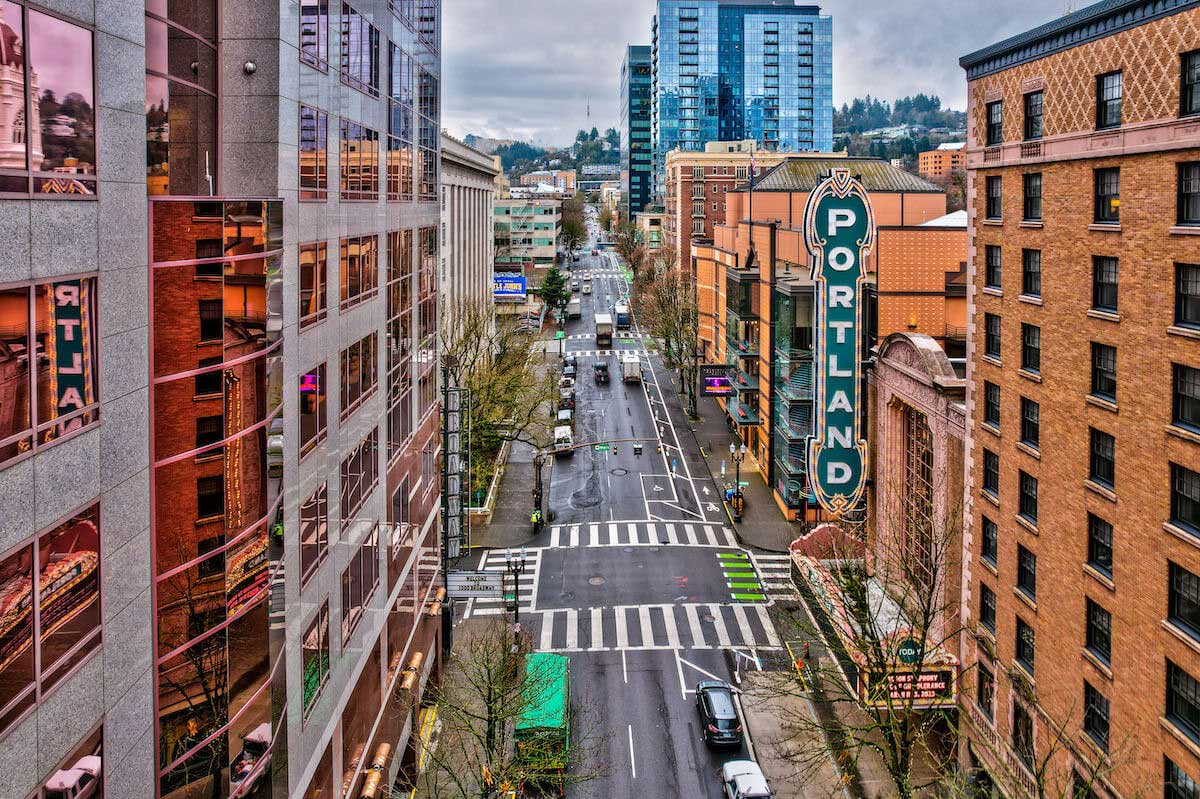
Retail replacement property in the Portland area splits into two very different stories right now: downtown centers still working through post-2020 vacancy, and suburban centers in Clackamas, Gresham, and the Tualatin-Sherwood corridor trading on more conventional terms.
Downtown Repricing vs. Suburban Centers
Ground-floor retail downtown has seen real repricing as office worker foot traffic shifted and some longtime tenants closed, which means basis can look attractive on paper while lease-up risk is genuinely higher than it was a decade ago. Suburban neighborhood centers with a grocery or service tenant anchoring the site have generally held occupancy more steadily, trading at a different risk profile even when the headline cap rate looks similar.
An investor comparing the two should treat them as different products entirely rather than variations on the same theme; the underwriting inputs, from lease-up cost assumptions to lender appetite, differ enough that a single spreadsheet template rarely fits both well.
Neighborhood-level foot traffic patterns downtown have also shifted block by block rather than uniformly, so a corridor a few blocks from a struggling stretch can perform very differently; a site visit at different times of day tells more than a citywide vacancy figure.
Reading a Retail Center's Tenant Mix
A center's anchor tenant sets the traffic pattern the inline shops depend on, so reviewing the anchor's lease term, renewal options, and any co-tenancy clause matters before looking closely at the smaller tenants at all. A center with a grocery anchor on a long remaining term reads very differently than one whose anchor space is leased to a tenant category under national pressure, even if both show similar current rent.
Reviewing whether the anchor's lease includes a co-tenancy clause that lets smaller tenants reduce rent or terminate if the anchor vacates adds another layer worth checking before assuming the current rent roll holds together in a downside scenario.
Inline tenants worth a closer look are local or regional operators without a corporate guarantee behind them; a strong sales history at the specific location matters more for these tenants than brand recognition does.
Sourcing Checklist
Retail center diligence needs to move through tenant risk before it moves through the building itself.
- Review the anchor tenant's remaining lease term and any co-tenancy language.
- Get a full tenant list with lease expirations mapped on a rolling calendar.
- Confirm CAM reconciliation history and whether recoveries have been fully collected.
- Check parking ratio against current retail lending standards for the center's size.
- Ask for a vacancy history over the past three to five years, rather than only current occupancy.
Vacancy and Re-Tenanting Risk
A center with visible vacancy is not automatically a bad replacement, but the underwriting needs to price in real leasing costs and time, not assume the space fills at pro forma rent within a few months. Getting a local leasing broker's honest read on re-tenanting timeline for the specific space type and size is worth more than a generic market vacancy statistic.
Ask specifically about how long comparable spaces have taken to re-lease over the past few cycles, rather than relying only on current occupancy, since a snapshot number says little about how quickly a vacant space would actually fill.
Suburban Corridor Alternatives
Centers along the Tualatin-Sherwood corridor, in Clackamas, or near Gresham's town center tend to be smaller, easier to finance, and less exposed to the leasing dynamics playing out downtown. For an investor working inside a fixed exchange deadline, that combination of smaller loan size and steadier occupancy history can matter as much as the headline return.
These corridors also tend to have simpler title and parking histories than older downtown buildings, which can shorten the diligence period meaningfully when the closing window is fixed by the exchange rather than negotiable.
Common 1031 Exchange Questions
Is downtown Portland retail a reasonable 1031 replacement target right now?
It can be, for an investor comfortable underwriting real lease-up time and cost rather than assuming quick backfill, but it is a different risk profile than a stabilized suburban center and should be modeled that way rather than on pre-2020 comparables.
How should you weigh a strip center's anchor tenant against its inline shop mix?
Start with the anchor's remaining term and renewal likelihood, since inline tenant traffic and rent depend heavily on the anchor staying in place; a strong inline mix behind a weak anchor is a bigger risk than it first appears.
What operating costs typically get passed through in a retail center lease?
Common area maintenance, property tax, and insurance are typically recoverable under NNN retail leases, though the specific reconciliation method and any expense caps vary lease to lease and should be confirmed rather than assumed.
Are suburban centers in Clackamas or Gresham easier to underwrite than close-in retail?
Generally yes, because occupancy and tenant mix have been more stable, and loan sizes tend to be smaller, which can also make them easier to close inside a fixed exchange timeline.
Does a co-tenancy clause matter if you're buying, not leasing, the retail center?
Yes, as the new landlord you inherit the co-tenancy obligations in the existing leases; a clause that lets inline tenants reduce rent if the anchor vacates directly affects the income you're underwriting, rather than only a future tenant's negotiating position.